
The Power & The Glory
I know, I know. I promised you psychology tips and insights but here I am going on about something completely off topic.
But this will make you think. It might also save our children's lives.
Oh and it might save the planet, if you care about that sort of thing.
This week I've become fascinated by...Physics.
And before you stop reading and go back to the Mail Online comments section, this won't be like falling asleep during Mr O'Connor's boring lessons back in the day.
Physics these days is cool. And sexy.
There are even Netflix series based entirely on Physics (see Dark Matter, 3 Body Problem etc etc).
And it turns out we know pretty much fuck all about Physics:
- Dark Matter: About 27% of the universe is composed of dark matter, a substance that doesn't emit, absorb, or reflect light. Despite this, we don't know what it does or what it's for.
- Dark Energy: Even more weird is dark energy, which makes up about 68% of the universe. Dark energy is thought to be responsible for the accelerated expansion of the universe, but we don't really know.
- Quantum Entanglement: Quantum entanglement is very weird. Just watch Dark Matter on Apple TV which attempts to explain it but be prepared to not understand any of it.
- The Nature of Time: Time is still not fully understood. Time can stretch and shrink depending on the speed at which an object is moving. The true nature of time, whether it flows or exists as a block (where past, present, and future are all equally real!?!), is still debated.
- The Multiverse Theory: Some theories in physics suggest the existence of multiple universes, each with different physical laws. This multiverse theory challenges our understanding of reality and raises questions about the uniqueness of our universe and the fundamental principles that govern it.
The downside of all this uncertainty is that Hollywood has used it to make some truly awful movies (avoid Dr Strange in the Multiverse of Madness at all costs).
However, in a corner of all this murkiness, there are some glimmers of hope.
And while the Green Party are trying to get us to stick solar panels on our roof and windmills in our garden, the one thing that might actually save the planet for future generations, is fusion power.
Fusion power has been the elusive dream of scientists and engineers for decades.
Imagine harnessing the power of the sun to meet our world’s energy needs. Unlike fission, which splits atoms, fusion merges them, promising nearly limitless, clean energy.
But the journey to achieving practical fusion power has been a challenging one. And we aren't there yet.
Let’s dive into the potential of fusion power and the hurdles that stand in its way.
The Promise of Fusion
Nuclear fusion is incredibly appealing. The fuel, primarily deuterium and tritium, is abundant and can be extracted from seawater.
Fusion releases energy with minimal radioactive waste compared to fission and poses no risk of a runaway reaction.
It’s a potential game-changer for clean energy, providing a stable and immense energy output without the intermittency issues of solar and wind power.
Why Fusion is Hard
Despite its promise, fusion power remains out of reach due to the extreme conditions required for fusion reactions.
Fusion requires temperatures of millions of degrees, creating a plasma where electrons are stripped from nuclei.
This plasma must be confined and sustained long enough for fusion to occur—a feat easier said than done.
Three main methods have been explored for plasma confinement:
- Gravitational Confinement: This method, which powers stars, isn’t feasible on Earth due to the enormous mass required, so that's a non-starter.
- Inertial Confinement: Uses lasers or explosions to compress fuel to the necessary conditions.
- Magnetic Confinement: Uses magnetic fields to contain the plasma, with the Tokamak and Stellarator being the primary designs.
Historic Milestones and Setbacks
Fusion research has a long history dating back to the 1930s.
Significant progress was made with the development of the Tokamak by Soviet scientists in the 1960s, which showed promising results in plasma confinement and temperature.
However, despite some progress, achieving a net-positive energy output—where more energy is produced than consumed—has so far proven impossible.
In the 1970s, fusion research gained momentum, spurred by the oil crisis and environmental concerns.
Large-scale projects like the Tokamak Fusion Test Reactor (TFTR) in the U.S. and the Joint European Torus (JET) in Europe aimed to achieve breakeven but fell short.
The complexity of plasma physics and instabilities made consistent progress difficult.
The Current Landscape
Today, the fusion race is heating up (lol) with significant investments from both public and private sectors.
Projects like ITER (International Thermonuclear Experimental Reactor) in France are aiming to demonstrate the feasibility of fusion as a large-scale power source.
Private companies are also making strides, leveraging decades of research and modern technology to develop compact and efficient fusion reactors.
The key challenge remains making fusion economically viable compared to other energy sources.
Innovations in materials science, superconducting magnets, and plasma control are crucial to overcoming these hurdles.
What Does This Mean?
While we're closer than ever to achieving practical fusion power, we aren't there yet.
And truthfully, most of you reading this will be dead when it does become a reality (cheery thought of the day!).
But the progress made so far could pave the way for a future breakthrough.
Continued investment and research are vital, as fusion holds the potential to revolutionise our energy landscape.
What Can You Do?
- Stay Informed: Follow developments in fusion research to understand how it could impact our children's energy future.
- Support Research: Advocate for funding and policies that promote clean energy research, including fusion.
- Sustainability: While fusion holds promise, continue supporting existing renewable energy sources and sustainability practices.
Fusion power is a beacon of hope for a clean energy future. The journey is long and fraught with challenges, but the potential rewards make it a quest worth pursuing.
And if this was all too much for you, then I appreciate you getting this far. Here, as a reward, is a cartoon:
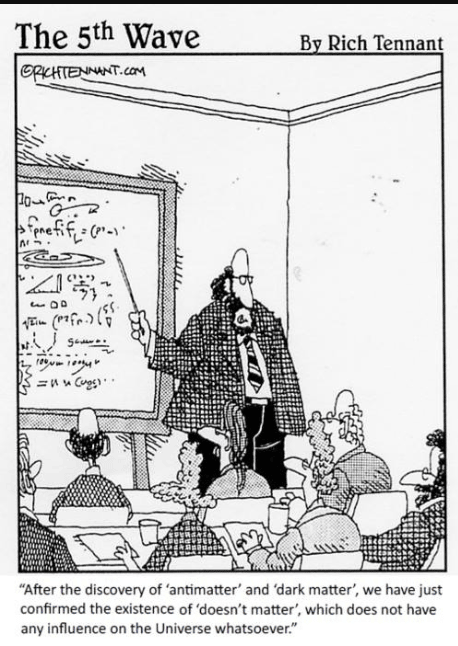
Until next time, stay curious.
Best,
Jon "the power" Kaye
P.S. Remember to share this newsletter if you are enjoying it. Thanks.
Original newsletter disclosures
DISCLAIMERS & DISCLOSURES This content is for education and entertainment purposes only. Jon does not provide tax or investment advice. The information is being presented without consideration of the investment objectives, risk tolerance, or financial circumstances of any specific investor and might not be suitable for all investors. Past performance is not indicative of future results. All investing involves risk, including the possible loss of principal.